
Not long ago, I floated the idea that the next big Netflix (NASDAQ: NFLX) hit might not be a movie or a serial TV show — it could be a tenacious push into the video game sector. The growing collection of interactive specials looked like an important part of that strategy, setting the stage for a more traditional slate of gaming experiences.
Well, I wasn’t exactly right. Netflix is still serious about video games, but those interactive video experiences won’t be a permanent part of that effort.
Netflix adjusts its gaming strategy
Netflix Games chief and video game industry legend Mike Verdu hinted at a strategy shift last December. “We’re not building those specific experiences anymore,” he told Gamefile reporter Steven Totilo, referring to interactive shows such as Black Mirror: Bandersnatch and Cat Burglar. Verdu explained that the interactive storytelling experience was “very limiting” and Netflix was moving on to more ambitious gaming ideas.
Now the company is taking this strategy shift to the next level. The Verge has confirmed that most of the interactive specials will be gone by December 1, 2024. Bandersnatch will remain alongside an Unbreakable Kimmy Schmidt game and two interactive adventures featuring Man vs. Wild host Bear Grylls. About 20 interactive specials are going away.
Embracing AI as a game-building tool for creative humans
At the same time, Verdu’s role within Netflix is changing. His new title, announced earlier this week, is vice president of generative artificial intelligence (AI) for games. In this role, Verdu hopes to use generative AI as a creative tool, accelerating the development of new titles.
“I am focused on a creator-first vision for AI, one that puts creative talent at the center, with AI being a catalyst and an accelerant,” Verdu said in a LinkedIn post. “AI will enable big game teams to move much faster, and will also put an almost unimaginable collection of new capabilities in the hands of developers in smaller game teams.”
Netflix remains heavily invested in video games, but the early attempts at making games playable with your smart TV’s remote control weren’t the right idea. The company has more than 100 mobile games on the market already, some of which are enhanced by interacting with your living room TV. More will come, especially once Mike Verdu figures out how to move the development process along more quickly with the use of generative AI.
The future of Netflix games
And the beat goes on, just to a different rhythm than I had imagined.
Netflix is still publishing lots of games. Some are well-known titles such as Grand Theft Auto: San Andreas and Bloons TD 6. Others are in-house developments, often based on exclusive Netflix content, including Stranger Things: 1984 or Too Hot To Handle 3.
It’s clear that the game list will continue to grow from here, and that the pace of publishing new titles should increase in 2025 and beyond. As for the interactive TV shows that are going away, the company wouldn’t do that if they were popular. The small handful of remaining titles are probably the cream of the crop.
“Bandersnatch” was viewed 900,000 times in the first half of 2024, for example. That’s not too shabby for a six-year-old production — especially since it’s a very adult experience with a TV-MA rating.
Monetizing Netflix games: What’s next?
Netflix is seeking new ways to monetize its games, which currently are included for free with any subscription to Netflix’s video-streaming services. The games don’t use the usual pay-to-win or freemium tricks, blissfully free of in-game purchases and advertising.
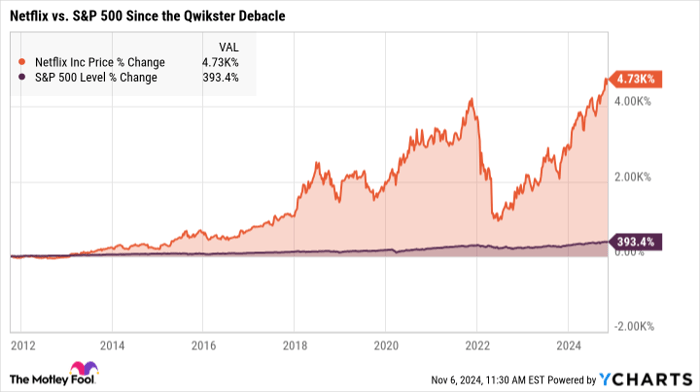
I wouldn’t be surprised to see a modest sprinkling of ads in future releases since Netflix now offers ad-based video subscriptions and is building up some expertise in the field of digital advertising. But a separation of the video and gaming services should complete the picture someday, much like the much-maligned Qwikster split created the online entertainment giant you see now.
Let me remind you what Netflix’s stock has done since evolving from the red DVD-by-mail envelopes:

Netflix may be setting the stage for its next big evolution, taking a big step into the video game business with AI assistance. While past performance isn’t a guarantee of future success, this could be a repeat of the game-changing Qwikster launch. I highly recommend having some Netflix shares in your pocket before Mike Verdu’s new ideas are unleashed.
Should you invest $1,000 in Netflix right now?
Before you buy stock in Netflix, consider this:
The Motley Fool Stock Advisor analyst team just identified what they believe are the 10 best stocks for investors to buy now… and Netflix wasn’t one of them. The 10 stocks that made the cut could produce monster returns in the coming years.
Consider when Nvidia made this list on April 15, 2005… if you invested $1,000 at the time of our recommendation, you’d have $892,313!*
Stock Advisor provides investors with an easy-to-follow blueprint for success, including guidance on building a portfolio, regular updates from analysts, and two new stock picks each month. The Stock Advisor service has more than quadrupled the return of S&P 500 since 2002*.
*Stock Advisor returns as of November 4, 2024
Anders Bylund has positions in Netflix. The Motley Fool has positions in and recommends Netflix. The Motley Fool has a disclosure policy.
5 Stocks Our Experts Predict Could Double In the Next Year
By submitting your email, you'll also get a free pivot & flow membership. A free daily market overview. You can unsubscribe at any time.